
Written by Stephen Leahy · Last updated 30 September 2026
Quick answer: UTM parameters are short tags added to a link so your analytics can tell which campaign sent each visitor. They only work if everyone names things the same way, so agree a convention up front: lowercase only, hyphens instead of spaces, a fixed list of allowed values, and one shared place to build links.
Few things damage marketing reports as quietly as messy campaign tags. “Email”, “email”, and “e-mail” show up as three different sources, and suddenly no one can say what the newsletter actually delivered. This guide explains the parameters, gives you a naming convention that holds up, and lists the mistakes to avoid. It also sets up the next step in this series, using these tags to attribute leads without cookies.
What are UTM parameters?
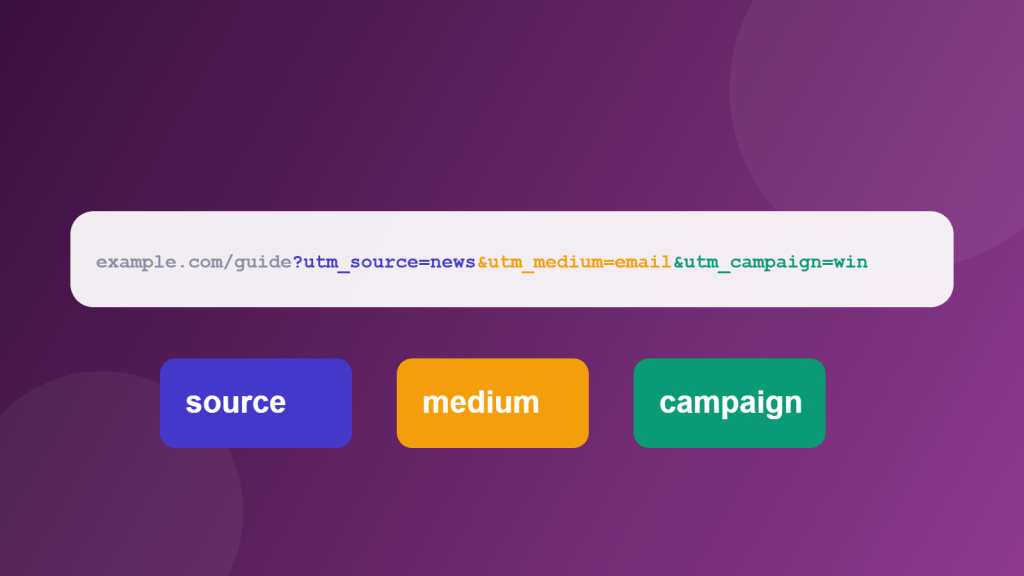
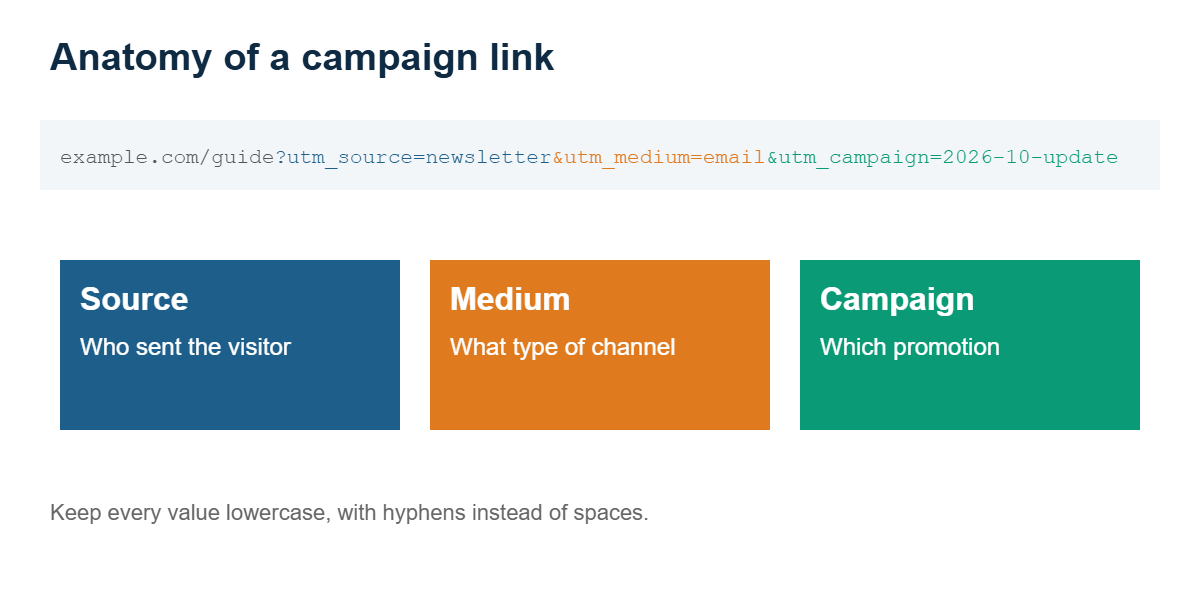
UTM parameters are labels added to the end of a URL. When someone clicks the link, analytics tools such as Google Analytics read the labels and record where the visit came from. Google’s own guide to campaign URL parameters uses this example: a link with a source, medium, and campaign attached.
The five UTM parameters explained
| Parameter | What it answers | Example |
|---|---|---|
| utm_source | Who or what sent the visitor? | newsletter, linkedin, partner-site |
| utm_medium | What type of channel was it? | email, social, cpc, affiliate |
| utm_campaign | Which campaign or promotion? | spring-launch |
| utm_content | Which version of the link or ad? (optional) | header-button, variant-b |
| utm_term | Which keyword? (optional, mainly paid search) | tracking-plan |
Source, medium, and campaign are the core three. Add content and term only when you will genuinely use them.
A UTM parameters naming convention that lasts
The rules are simple, and the discipline is what matters:
- Use lowercase only. Analytics tools treat “Email” and “email” as different values.
- Use hyphens, not spaces or underscores, so values stay readable and never break a link.
- Keep a controlled list of values for source and medium. Write the approved list down and stick to it.
- Keep campaign names consistent. A pattern such as
yyyy-mm-topicorproduct-offer-monthmakes reports sortable. - Never put personal data in a tag. No names, email addresses, or anything that identifies a person.
- Build links in one shared place, such as a spreadsheet with a formula or a link builder, rather than typing them by hand.
Example of a clean UTM naming convention
| Channel | utm_source | utm_medium | utm_campaign |
|---|---|---|---|
| Monthly newsletter | newsletter | 2026-10-product-update | |
| LinkedIn post | social | 2026-10-tracking-guide | |
| Partner website | partner-name | referral | 2026-q4-partnership |
| Affiliate link | affiliate-name | affiliate | 2026-10-review |
Common UTM mistakes to avoid
- Tagging internal links. Putting UTM tags on links within your own site can overwrite the visitor’s real source and start a new session.
- Mixed capitalisation. This splits one channel into several rows.
- Vague values. “Social” as a source tells you nothing. Name the platform.
- Dropping tags during redirects. Test every link to make sure the parameters survive all the way to the landing page.
- No documentation. If the convention lives in one person’s head, it will drift.
How to test your UTM links
- Click the finished link in a private browser window.
- Check that the landing page address still shows the parameters.
- Confirm your analytics records the right source, medium, and campaign, for example in a real-time report.
- If you capture parameters in a form for your CRM, submit a test lead and check the values arrive. We cover that in our guide to lead attribution without cookies.
UTM parameters FAQ
What does UTM stand for?
UTM stands for Urchin Tracking Module, named after the analytics software Google acquired and built Google Analytics from.
Are UTM parameters case sensitive?
Yes. Analytics tools generally treat ‘Email’ and ’email’ as different values, which is why a lowercase-only rule is so important.
Which UTM parameters are required?
Source, medium, and campaign are the core three. Content and term are optional.
Should I use UTM parameters on internal links?
No. Tagging links within your own site can overwrite the visitor’s original source and split their journey into separate sessions.
About the author: Stephen Leahy is a multi-award-winning digital marketing specialist with more than a decade of experience in SEO, GEO, and web analytics. Read his full profile.